The New York Times International - January 18, 2011
North African Seasoning For Top French Kitchens
Alain Ducasse, chef and patron of a world class restaurant empire, has reached out to help 15 North African women, born in the Paris urban neighborhoods, to become chefs.
Richard Wottrich

CoolCooksShare
1/18/2011


1/16/2011

Sautéed Brussels Sprouts, Shallots and Water Chestnuts
The Brussels sprout is a cultivar group of wild cabbage grown for its small, leafy green buds. Forerunners to modern Brussels sprouts were likely cultivated in ancient Rome. Brussels sprouts as we now know them were grown possibly as early as the 13th century in what is now Belgium. Production of Brussels sprouts in the United States began around 1800, when French settlers brought them to Louisiana.
Brussels sprouts, as with broccoli and other brassicas, contains sulforaphane, a chemical believed to have potent anti-cancer properties. Although boiling reduces the level of the anti-cancer compounds, steaming, microwaving, and stir frying does not result in significant loss. Brussels sprouts and other brassicas are also a source of indole-3-carbinol, a chemical which boosts DNA repair in cells and appears to block the growth of cancer cells.
1 pound Brussels sprouts, trimmed and cut in half lengthwise
2 small shallots, trimmed, peeled and sliced
1 can sliced water chestnuts, drained
2 tablespoons peanut oil
1 tablespoon seasoned rice vinegar
2 tablespoons sherry vinegar
1/2 juice from one half orange
Kosher salt to taste
Ground white pepper to taste
Preparation: Bring a pot of salted water to a boil and add 1 tablespoon of sherry vinegar. Blanch the Brussels sprouts for four minutes until they turn bright green and are just tender. Drain and shock briefly with cold water to arrest cooking. In a fry pan heat the peanut oil and sauté the shallots for three minutes. Add the water chestnuts and sauté until they just start to brown. Deglaze the pan with the remaining sherry vinegar and orange juice for one minute. Add the Brussels Sprouts and seasoned rice vinegar and sauté until hot, about two minutes.
Presentation: Serve immediately with snowy white rice and another Chinese dish of your choice. We served this with Sweet, Sour, and Spicy Meatballs.
1/01/2011
 |
| Paris Market |
(Coddled Eggs With Mushrooms)
Serves 4
This recipe is from Frédéric Thevenet at Restaurant Aux Lyonnais (opened 1890) in Paris. Upon returning from Paris this past late October, I have been experimenting with bistro dishes because – well because it represents the best of home cooking. The first bistro owners were not professionally trained chefs, but rather they cooked plats ménager (housewife’s dishes). This is such a dish.
¾ cup good olive oil
4 cloves garlic
4 tablespoons unsalted butter
8 ounces spinach, stemmed
Kosher salt and freshly ground pepper to taste
8 ounces of mushrooms as you like, quartered
½ cup heavy cream
4 eggs
1 baguette, cut on diagonal into ½-inch slices and toasted
Preparation:
Make a garlic confit: Heat oil in a small saucepan over medium-low heat. Add two cloves of garlic and cook stirring occasionally, until garlic is tender, 10-15 minutes. Using a slotted spoon, transfer garlic to cutting board; let cool. Thinly slice the garlic confit lengthwise. (Reserve the olive oil for another use)
Poke one clove of garlic with the tines of a fork several times; set aside. Melt 2 tablespoons of butter in a large skillet over medium heat until foamy. Add the spinach and cook, stirring occasionally with the fork used to poke the garlic (to perfume the spinach), until tender, about 5 minutes. Season with salt and pepper. Transfer the spinach to a clean tea towel and wipe out the skillet. Gather the ends of the towel and twist to squeeze out excess liquid. Set spinach aside.
Melt remaining butter in the skillet over medium heat. Add the remaining garlic clove and the mushrooms, season with salt and pepper, and cook, stirring occasionally, for 5 minutes. Add the heavy cream and cook 5 minutes more. Remove pan from the heat, cover, and let the mushrooms steep for 15 minutes.
Heat oven to 400 degrees. Divide the spinach and mushroom mixture equally in four 6-ounce ramekins. Add reserved slices of garlic confit. Crack 1 egg into each ramekin. Transfer ramekins to a shallow baking pan and pour in enough boiling water to come halfway up the sides of the ramekins. Cover the pan with aluminum foil and transfer to the oven. Cook until the whites are set and the yolks are still runny, about 10-15 minutes depending upon your oven.
Serve with toasted baguettes and salt and pepper the eggs to taste.
12/30/2010
 |
| Cinque Terre Lemons |
Pork Marinara & Fettuccine
Every once in a while you nail a dish perfectly. It doesn’t happen often, so when it does I am compelled to immediately record preciously how I prepared it. Italian pasta is meant to be cooked al dente and then finished off by mixing in the sauce, so it adheres to every pasta strand. Pasta sauce is also all about using the ingredients at hand. In this case I had the remnants of a pork rib roast to play with. Pasta is in the moment and always best served immediately after preparation. Try this. It will surprise you.
1 26-ounce jar of Trader Joe’s Tomato Basil Marinara sauce
1 pound dry fettuccine, cooked
4 cups finely chopped cooked pork
1 cup chopped Vidalia onion
1 garlic clove, minced
1 strip of cooked bacon, chopped
½ cup chopped flat leaf parsley
1 cup chicken stock
3 tablespoons olive oil
1 teaspoon fresh lemon juice
1 teaspoon white vinegar
1 teaspoon dried Greek oregano
1 teaspoon medium hot chili powder
olive oil to taste
salt and pepper to taste
grated Parmigiano Reggiano
Preparation: In a large pot of boiling salted water cook the fettuccine until al dente; usually about eight minutes. In a large cast iron fry pan sauté the Vidalia onions in the olive oil until just softened, about three minutes. Add the garlic and sauté for another minute. Add the 4 cups of cooked chopped pork and bacon and season with the Greek oregano, chili powder, salt and pepper, and sauté for two minutes. Add the Marinara sauce, chicken stock, lemon juice, vinegar, parsley and stir. Bring to a quick boil and then set to low and cook for ten minutes more. Adjust seasoning to your preference.
In a large pan or bowl combine the sauce with the drained fettuccine. Add a splash of olive oil to your preference. Serve at once with grated Parmigiano Reggiano.
Richard Wottrich
12/12/2010

Black Mission Fig & Red Grape Frisée Salad
This salad of bright flavors pairs well with an omelet for dinner, a bistro chicken fricassee, or a flank steak with mustard cream sauce.
2 cups of loosely packed Frisée greens
1 heart of Romaine lettuce, chopped into 2-inch lengths
½ cup of loosely packed flat parsley leaves
½ red onion, thinly sliced
6 Black Mission figs, quartered
12 seedless red grapes, halved
½ orange
1 tablespoon sherry vinegar
2 tablespoons olive oil
sea salt and freshly ground pepper to taste
Richard Wottrich
12/10/2010

(Fricassée de Poulet aux Deux Vinaigres)
Friends often ask me for recommendations on how to get started in serious cooking and I usually go into a tirade on buying small quantities of the best real food you can afford and then getting out of the way of the ingredients. Then I mention cookbooks from Ina Garten (Barefoot Contessa) or Jamie Oliver. But for very sophisticated Parisian fare and perfect technique The Paris Cookbook (Harper Collins, 2001) by Patricia Wells (a close friend of Ina) is another terrific choice. Sauces can be daunting to even the experienced cook, but Patricia lays out straight forward recipes that build sublime sauces before you know it. This is such a recipe.
1 fresh farm chicken, 3-4 pounds, cut into 8 pieces (*see note)
sea salt, to taste
fresh ground white pepper, to taste
3 tablespoons extra virgin olive oil
4 tablespoons unsalted butter
1/3 cup best quality white champagne vinegar
1/3 cup best quality red wine vinegar
1/3 cup of the white wine you are having with dinner
2 shallots, finely minced
3/4 cup tomato sauce
1 2/3 cups chicken stock
1 cup heavy cream
Preparation: 1. Pat the chicken dry and liberally season it on all sides with sea salt and white pepper. 2. In a deep skillet, combine the oil and butter, and heat over moderate heat. When the fats are hot but not smoking, add the chicken, skin side down, and brown until it turns an even golden color, about 5 minutes. Turn the pieces and brown them on the other side, 5 minutes more. Carefully regulate the heat to avoid scorching the skin. (This may have to be done in batches.) When all the pieces are browned, use tongs (to avoid piercing the meat) to transfer them to a platter. 3. Pour off and discard the fat in the skillet. Off the heat, add the two vinegars and deglaze the pan. Add the wine. Add the shallots and cook, covered, over low heat until softened, 2 to 3 minutes. Return the chicken to the pan. Cover and simmer over low heat for 15 minutes. Transfer the chicken pieces to a large warmed platter and cover with aluminum foil to keep warm. 4. Add the tomato sauce and stock to the skillet; stir to blend thoroughly. Add the cream and cook, uncovered, over medium heat for 5 minutes. Return the chicken to the skillet, cover and cook over low heat, turning the pieces from time to time to absorb the sauce, for about 10 minutes. Taste for seasoning, and serve.
Presentation: I served this with steamed Broccolini and two pieces of chicken per serving and poured the sauce on! A side salad of flat parsley, Romaine leaves and frisée, quartered black figs, sliced red onion and halved red grapes with vinaigrette was perfect.
* Start with the chicken at room temperature. Patricia notes that if you can't find a fresh farm chicken, a free-range or organic chicken will do. I bought an organic chicken at Harrison’s Poultry Farm, Inc. in Glenview for $5.60. Patricia serves the dish over rice or pasta. I used sherry vinegar instead of champagne vinegar, seasoned with dry tarragon, and added thin sliced white button mushrooms in Step. 4.
12/05/2010
Jack Daniel’s Squares
 Makes 12-16 Squares
These bourbon-spiked brownies hale from the holiday cookie contests Sharon used to host at the A-Plus Talent Agency, Inc. Christmas party, held at our home on 1845 N. Dayton St., in Chicago in the late 1980s. As one of the erstwhile judges, I can attest that many of the submitted confectioneries were truly dismal, but these spiked squares always brought raves. I personally happen to prefer my Jack on the rocks with a twist, water back.
Squares
2 cups granulated sugar
1 cup chopped pecans
½ cup all-purpose flower
½ cup unsweetened cocoa powder
3 large eggs
3 tablespoons Jack Daniel’s whiskey
1 teaspoon vanilla extract
½ pound (2 sticks) unsalted butter, melted
Icing
1 cup confectioner’s sugar
1 1-ounce square unsweetened chocolate, melted and cooled
1 tablespoon unsalted butter, softened
1 tablespoon Jack Daniel’s whiskey
1 tablespoon milk
1 teaspoon vanilla extract
Preparation: 1. Heat your oven to 350°. 2. Butter a 9-inch square baking pan. 3. For the squares: In a bowl combine the granulated sugar, pecans, flour and cocoa and stir until thoroughly mixed. 4. Add the eggs, whiskey, vanilla and melted butter, mixing until smooth. 5. Pour the batter into the buttered pan and bake in the center of the oven for 45 minutes. 6. Let cool to room temperature on a wire rack. 7. For the icing: In a bowl, combine the confectioner’s sugar, chocolate, butter, whiskey, milk, and vanilla. 8. Beat with a wooden spoon until smooth and spreadable. If the icing is too thick, add more milk, a teaspoon at a time. 9. Coat the tops of the squares with the icing and serve cold or at room temperature.

These bourbon-spiked brownies hale from the holiday cookie contests Sharon used to host at the A-Plus Talent Agency, Inc. Christmas party, held at our home on 1845 N. Dayton St., in Chicago in the late 1980s. As one of the erstwhile judges, I can attest that many of the submitted confectioneries were truly dismal, but these spiked squares always brought raves. I personally happen to prefer my Jack on the rocks with a twist, water back.
Squares
2 cups granulated sugar
1 cup chopped pecans
½ cup all-purpose flower
½ cup unsweetened cocoa powder
3 large eggs
3 tablespoons Jack Daniel’s whiskey
1 teaspoon vanilla extract
½ pound (2 sticks) unsalted butter, melted
Icing
1 cup confectioner’s sugar
1 1-ounce square unsweetened chocolate, melted and cooled
1 tablespoon unsalted butter, softened
1 tablespoon Jack Daniel’s whiskey
1 tablespoon milk
1 teaspoon vanilla extract
Preparation: 1. Heat your oven to 350°. 2. Butter a 9-inch square baking pan. 3. For the squares: In a bowl combine the granulated sugar, pecans, flour and cocoa and stir until thoroughly mixed. 4. Add the eggs, whiskey, vanilla and melted butter, mixing until smooth. 5. Pour the batter into the buttered pan and bake in the center of the oven for 45 minutes. 6. Let cool to room temperature on a wire rack. 7. For the icing: In a bowl, combine the confectioner’s sugar, chocolate, butter, whiskey, milk, and vanilla. 8. Beat with a wooden spoon until smooth and spreadable. If the icing is too thick, add more milk, a teaspoon at a time. 9. Coat the tops of the squares with the icing and serve cold or at room temperature.
12/04/2010

This classic bistro dish of pan-fried steak and mustard cream sauce is simple and quick. Bistro cooking is based upon utilizing humble ingredients that are exalted via supreme saucing techniques – simple fare – glorious results. In Paris this dish would be done with flat iron steaks (flat blade) or hanger steaks. Either is fine, but I would suggest picking up a flank steak when on sale. The flavor is terrific.
1 pound flank steak
1 tablespoon unsalted butter
1 tablespoon canola oil
1 tablespoon cognac or brandy
¼ cup heavy cream
1 ½ tablespoons Dijon mustard
8 white button mushrooms, slice thinly
1 tablespoon minced flat-leaf parsley
Preparation: Season the flank steak with salt and pepper. Heat the butter in a 12” cast-iron skillet over medium-high heat. Add the steak and cook, turning once, until browned and cooked to the desired temperature, about 6 minutes for medium rare. Remove pan from the heat. Transfer the steak to a cutting board and allow to rest for 10 minutes. Pour off and discard all but one tablespoon of fat in the pan.
Add most of the cognac to the pan and stir, scraping browned bits from the bottom with a wooden spoon. Return pan to medium-high heat and cook for 20 seconds. Add the cream, mustard, and sliced mushrooms, season with sea salt and pepper, and cook, stirring vigorously, until the sauce just thickens. Stir in the remaining cognac.
Slice the flank steak on a slanting angle against the grain. Display several thin slices across the plate and pour on the sauce. Garnish with the minced parsley. Add freshly ground pepper and serve. Pair with a whole leaf Caesar salad.
Richard Wottrich
11/21/2010
The Ecstasy of Modern Grocery Shopping
I noticed an essay in the NYT Sunday edition today and was struck by its title, “The Agony of Modern Grocery Shopping.” My immediate reaction was to wonder why the author did not stay out of supermarkets if they bothered him. But upon reflection I decided to take a different tact. “We live in the best of times for real food shopping.”
I am a cook who loves to prepare and present real food made made from scratch. I have been cooking for 20 years, write a cooking blog ( http://coolcook.blogspot.com ), and can say definitively that times have never been better for this passion. For starters I shop every Saturday morning at the Evanston (Illinois) Farmers Market. There I buy eggs from a real farm, organic vegetables, wild mushrooms, artisan cheeses from Wisconsin and local fruit from an orchard. Alternatively there are dozens of cooperative truck farms in the Chicago region that sell shares in their annual crops. You can pick up your produce at the farm each week and show your kids where their food comes from.
Three miles from my home is a 100,000 square foot Asian market with the largest fish bar I have ever seen, and every other Asian ingredient known. I take my grandson there just to show him what seafood looks like. Even closer is a Japanese market with sushi-grade seafood, along with The Fresh Market across the street that has an excellent meat selection. Every few months I visit a Chicago-based chain of spice shops, The Spice House, which carries an astounding variety of ingredients.
Our local Costco carries bulk food items at prices that cannot be duplicated and it has a selection of excellent wines at very low prices that are worth the trip. Just a bit further is a local Greek-owned fruit and vegetable shop that has bakery specialties, excellent lamb and imported feta cheeses and olives. My local butcher shop will accommodate my every whim, including preparing a standing rib pork roast with little notice. Around the corner from me is Harrison’s Poultry Farm, which provides organic poultry products to the top restaurants in Chicago. Almost every month I buy a seven-pound capon and have a magnificent roasted chicken.
You’ll notice that I have described ten food destinations and never mentioned a supermarket. The choices are there if you look. Does quality cost more? Sure it does, but if you quite naturally reduce the quantity you eat and replace it with quality you will dine better and spend the same. Does this take more time? I would ask that question in a differently manner. Does your family deserve this attention? Should your children know where real food comes? Should a family sit down every evening possible and share in breaking bread and conviviality?
Preparing and presenting food is part of the natural rhythm of life and these are the best of times.
Richard Wottrich
I noticed an essay in the NYT Sunday edition today and was struck by its title, “The Agony of Modern Grocery Shopping.” My immediate reaction was to wonder why the author did not stay out of supermarkets if they bothered him. But upon reflection I decided to take a different tact. “We live in the best of times for real food shopping.”
I am a cook who loves to prepare and present real food made made from scratch. I have been cooking for 20 years, write a cooking blog ( http://coolcook.blogspot.com ), and can say definitively that times have never been better for this passion. For starters I shop every Saturday morning at the Evanston (Illinois) Farmers Market. There I buy eggs from a real farm, organic vegetables, wild mushrooms, artisan cheeses from Wisconsin and local fruit from an orchard. Alternatively there are dozens of cooperative truck farms in the Chicago region that sell shares in their annual crops. You can pick up your produce at the farm each week and show your kids where their food comes from.
Three miles from my home is a 100,000 square foot Asian market with the largest fish bar I have ever seen, and every other Asian ingredient known. I take my grandson there just to show him what seafood looks like. Even closer is a Japanese market with sushi-grade seafood, along with The Fresh Market across the street that has an excellent meat selection. Every few months I visit a Chicago-based chain of spice shops, The Spice House, which carries an astounding variety of ingredients.
Our local Costco carries bulk food items at prices that cannot be duplicated and it has a selection of excellent wines at very low prices that are worth the trip. Just a bit further is a local Greek-owned fruit and vegetable shop that has bakery specialties, excellent lamb and imported feta cheeses and olives. My local butcher shop will accommodate my every whim, including preparing a standing rib pork roast with little notice. Around the corner from me is Harrison’s Poultry Farm, which provides organic poultry products to the top restaurants in Chicago. Almost every month I buy a seven-pound capon and have a magnificent roasted chicken.
You’ll notice that I have described ten food destinations and never mentioned a supermarket. The choices are there if you look. Does quality cost more? Sure it does, but if you quite naturally reduce the quantity you eat and replace it with quality you will dine better and spend the same. Does this take more time? I would ask that question in a differently manner. Does your family deserve this attention? Should your children know where real food comes? Should a family sit down every evening possible and share in breaking bread and conviviality?
Preparing and presenting food is part of the natural rhythm of life and these are the best of times.
Richard Wottrich
11/16/2010
Meatloaf Olivera
Serves 20

Sometimes a large crowd is expected for dinner, including several kids. The leaves are turning and it dips below 40-degrees outside. A football game is on and cold beer is replaced with good Scotch. It’s time for an old fashioned 25-ingredient five-pound meatloaf. As for scaling this recipe down, don't even think about it! Leftovers make great rye bread sandwiches the next day.
1 pound ground Bison (Buffalo)
1 pound ground chuck (beef)
1 pound ground pork
1 pound sweet Italian sausage, casings removed, crumble the stuffing
4 cups Japanese Panko bread crumbs
3 eggs, lightly beaten
1 large sweet onion, chopped
1 large red pepper, seeded and chopped
1 jalapeño pepper, charred, seeded, skinned and chopped
1 tablespoon crushed Aleppo chili pepper (or any crushed chili)
1 cup capers, drained or salt cured
2 cups salsa, medium heat
1 teaspoon hot sauce
3 tablespoons olive oil
3 tablespoons Dijon mustard
1 tablespoon whole brown mustard seed
1 tablespoon celery seed
2 tablespoons fennel seed
2 tablespoons Greek oregano
1 tablespoon Worcestershire sauce
1 teaspoon lemon juice
1 teaspoon apple vinegar
2 tablespoons kosher salt (If using salt cured capons, cut kosher salt in half)
2 tablespoons ground black pepper
8 strips of natural bacon, cut in half (no nitrates)
Springs of fresh rosemary and thyme
Preparation: Set your oven to 400-degrees. In a large bowl combine all the ingredients, except the bacon, rosemary and thyme. Using your hands or two large spoons, mix the ingredients thoroughly making sure not to compress or pack the mixture. Take a large cast iron pan (15-inches) or a large heavy bottomed stainless steel roaster and spray the inside with Pam, or coat it with butter. In the pan free form a large rectangular loaf. Square up the sides and corners with a large spatula, leaving a gently rounded top. Overlap the strips of bacon evenly across the top of the meatloaf. Grind black pepper over the loaf. Surround the loaf with the springs of rosemary and thyme. Roast the meatloaf for roughly 90 minutes, until a nice crust forms and a meat thermometer reads at least 140-degrees. Remove from the oven and cover with aluminum foil. Let the meatloaf rest for at least 30 minutes. Cut into slabs and serve with Cornichons (pickles), mashed potatoes and gravy. If there are leftovers (there won’t be) make cold sandwiches on rye the next day.
Richard Wottrich – richard.wottrich@gmail.com – http://coolcook.blogspot.com
Serves 20

Sometimes a large crowd is expected for dinner, including several kids. The leaves are turning and it dips below 40-degrees outside. A football game is on and cold beer is replaced with good Scotch. It’s time for an old fashioned 25-ingredient five-pound meatloaf. As for scaling this recipe down, don't even think about it! Leftovers make great rye bread sandwiches the next day.
1 pound ground Bison (Buffalo)
1 pound ground chuck (beef)
1 pound ground pork
1 pound sweet Italian sausage, casings removed, crumble the stuffing
4 cups Japanese Panko bread crumbs
3 eggs, lightly beaten
1 large sweet onion, chopped
1 large red pepper, seeded and chopped
1 jalapeño pepper, charred, seeded, skinned and chopped
1 tablespoon crushed Aleppo chili pepper (or any crushed chili)
1 cup capers, drained or salt cured
2 cups salsa, medium heat
1 teaspoon hot sauce
3 tablespoons olive oil
3 tablespoons Dijon mustard
1 tablespoon whole brown mustard seed
1 tablespoon celery seed
2 tablespoons fennel seed
2 tablespoons Greek oregano
1 tablespoon Worcestershire sauce
1 teaspoon lemon juice
1 teaspoon apple vinegar
2 tablespoons kosher salt (If using salt cured capons, cut kosher salt in half)
2 tablespoons ground black pepper
8 strips of natural bacon, cut in half (no nitrates)
Springs of fresh rosemary and thyme
Preparation: Set your oven to 400-degrees. In a large bowl combine all the ingredients, except the bacon, rosemary and thyme. Using your hands or two large spoons, mix the ingredients thoroughly making sure not to compress or pack the mixture. Take a large cast iron pan (15-inches) or a large heavy bottomed stainless steel roaster and spray the inside with Pam, or coat it with butter. In the pan free form a large rectangular loaf. Square up the sides and corners with a large spatula, leaving a gently rounded top. Overlap the strips of bacon evenly across the top of the meatloaf. Grind black pepper over the loaf. Surround the loaf with the springs of rosemary and thyme. Roast the meatloaf for roughly 90 minutes, until a nice crust forms and a meat thermometer reads at least 140-degrees. Remove from the oven and cover with aluminum foil. Let the meatloaf rest for at least 30 minutes. Cut into slabs and serve with Cornichons (pickles), mashed potatoes and gravy. If there are leftovers (there won’t be) make cold sandwiches on rye the next day.
Richard Wottrich – richard.wottrich@gmail.com – http://coolcook.blogspot.com
10/04/2010

Mushroom Barley Soup
My dad used to make mushroom barley soup in the Fall every year when the leaves started to turn. Coming in after tossing the football around on a Saturday, we’d have hot bowls of soup and chunks of freshly baked bread for dipping.
Years later I have learned that mushrooms may have hypoglycemic activity, anti-cancer activity, anti-pathogenic activity, and immune system enhancing activity. Recent research has found that the oyster mushroom naturally contains the cholesterol drug lovastatin; some mushrooms produce large amounts of vitamin D when exposed to UV light and that certain fungi may be a future source of taxol. To date, penicillin and the statin drugs lovastatin, and mevastatin, are notable pharmaceuticals which have been isolated from the fungal kingdom. Other pharmaceuticals derived from fungi include ciclosporin, griseofulvin, cephalosporin, and ergometrine.
Try an assortment of crimini, Portobello, shiitake, maitake (hen-of-the-woods), oyster, and enoki mushrooms. Also use wild mushrooms if you can. Usually a good farmers market will have a mushroom purveyor who will have interesting selections. They cost a bit more, but the freshness is important. Mushrooms taste fantastic and they are good for you – it’s a win, win.
Ingredients:
1/4 cup olive oil
1 tablespoon butter
1 cup chopped onion
3/4 cup diced carrots
1/2 cup chopped celery
1 teaspoon minced garlic
1 pound cleaned sliced fresh mushrooms
1 tablespoon Madeira or Amontillado
4 cups chicken broth
4 cups beef broth
2 tablespoons flour
1 teaspoon fresh lemon juice
1 teaspoon apple vinegar
1 cup barley
salt and pepper to taste
2 tablespoons fresh Thyme
Directions:
Heat the oil and butter in a large soup pot over medium heat. Add the onion, carrots, celery and garlic; cook and stir until onions are tender and transparent. Stir in the barley grains until just coated and toasted. Stir in mushrooms and continue to cook for a few minutes. Mix the flour into the chicken and beef stock and pour into the pot and stir until smooth. Add the lemon juice, vinegar and Madeira and bring to a quick boil, then reduce heat to low. Cover and simmer until barley is tender, about 50 minutes. Season with salt, pepper and Thyme before serving.
9/04/2010
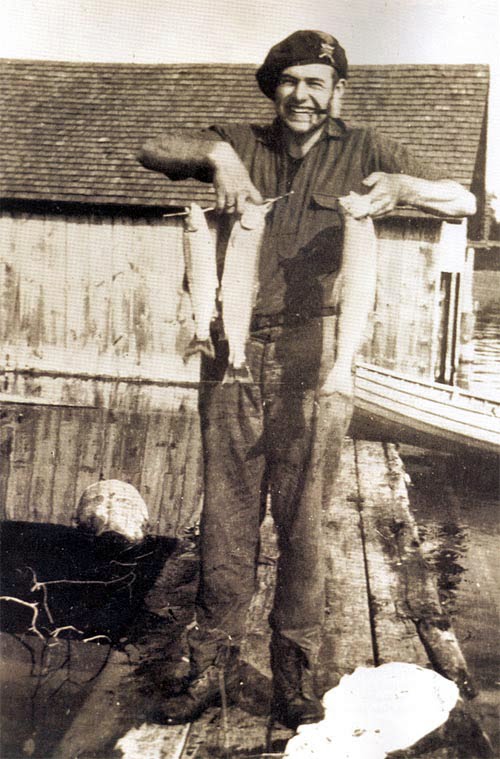
Most folks who “know” Ernest Hemingway know that he spent many years in Northern Michigan. His family owned a summer home called Windemere on Walloon Lake, near Petoskey, Michigan. Growing up Hemingway fished for Brook Trout in most of the area streams, including School and Bear Creek, and the Boardman, Sturgeon, Black and Pigeon rivers. I have fished many of these same streams over the years, as we owned a family cottage near Elk Rapids on Grand Traverse Bay for over 40 years.
In 1920 Hemingway wrote a piece for The Toronto Star entitled “Camping Out.” In it he wrote, “A pan of fried trout can’t be bettered and they don’t cost any more than ever. But there is a good and bad way of frying them.”
Hemingway’s recipe was simple. “The proper way is to cook over coals [in a fry pan]... Put the bacon in and when it is about half cooked lay the trout in the hot grease, dipping them in corn meal first. Then put the bacon on top of the trout and it will baste them as it slowly cooks. The coffee can be boiling at the same time and in a smaller skillet pancakes being made that are satisfying the other campers while they are waiting for the trout.”
My father and I cooked Brook Trout this way, especially on fly in fishing trips in Canada. Our Indian guide, Eli, would set up a shore lunch right on the banks of a lake and grease the spiders (flat-bottomed fry pans) with lard. The red fleshed Brook Trout were gutted and cleaned a few feet away, then brought over and dredged in corn meal, waiting for the strips of bacon to crackle. The Trout would fry up beautifully in the hot grease, crisp skin on the outside and succulent moist flesh inside.
From the water to the tension of the line to the hot spider is more than just a state of mind, as you cannot create this dish unless you are really there.
Richard Wottrich
8/31/2010

Piperies Gemistes Me Feta (Peppers Stuffed With Feta)
This Greek (Macedonia) dish is made with sweet Florina peppers, although Fresno or Anaheim chilies may be substituted. This dish appeared on the Aug/Sep 2010 cover of Saveur magazine. Serve this with a slow-braised leg of lamb and Horiatiki (Greek Salad) for a perfect dinner.
2 Fresno or Anaheim chilies, 4” to 5”
6 ounces of Feta cheese
2 tablespoons olive oil
2 tablespoons Greek yogurt
1 tablespoon minced fresh parsley
½ teaspoon lemon zest
½ teaspoon dried Greek oregano
2 egg yolks
Kosher salt and ground pepper
¼ cup grated Parmesan cheese
Slice the peppers in half lengthwise and remove seeds and membranes. In a large bowl, use a hand mixer to whip the Feta, oil, yogurt, parsley, lemon zest, oregano and egg yolks. Season with salt and pepper. Stuff each pepper with the filling. Roast in a 300-degree oven for 15 minutes, or until the peppers are just softened. Sprinkle the parmesan on top and broil for another 2 minutes until golden brown. Serve hot. Serves Four.
8/17/2010

Roasted Shrimp, Feta & Orzo
Orzo is an Italian pasta shape which resembles grains of rice. In fact, “orzo” means “barley” in Italian, and in Italian cuisine, the word “orzo” often refers to barley, as in the case of drinks made with roasted barley.
Feta (Greek: φέτα) is a brined curd cheese traditionally made in Greece. Feta has been an EU Protected Designation of Origin (PDO) product since 2002. Only cheeses produced in a traditional way in some areas of Greece (mainland and the island of Lesvos), and made from sheep's milk, or from a mixture of sheep's and goats’ milk (up to 30%) of the same area, may bear the name "feta".
Be aware of the environmental issues surrounding farmed shrimp, especially as farmed in certain Asian countries. You have no control over what steroids, herbicides and similar toxins were utilized in the particular country of origin. Wild shrimp is a better choice.
kosher salt
olive oil
¾ pound of orzo
½ cup freshly squeezed lemon juice (3 medium lemons)
freshly ground pepper
2 pounds shrimp (16 to 18 count), peeled and deveined
1 cup minced scallions, white and green parts
1 cup fresh dill, chopped
1 cup fresh flat-leaf parsley, chopped
1 cucumber, unpeeled, seeded, medium dice
1 medium-sized red onion, diced
¾ pound good quality feta cheese, ½ inch dice
Preparations: Preheat the oven to 400 degrees. Fill a large pot of water, add kosher salt and a splash of oil, and bring to a boil. Cook the orzo for 10 to 12 minutes until al dente, stirring occasionally. It takes time for the orzo to plump up, so be patient.
Prepare the dressing by whisking the lemon juice with the olive oil, two teaspoons of kosher salt and freshly ground black pepper. Drain the orzo and put into a big bowl. Add the dressing immediately while the orzo is hot and mix well.
Put the shrimp in a bowl and add olive oil, salt and pepper. Toss briefly. Put the shrimp on a baking sheet in a single layer. Roast for 4 to 5 minutes until firm – do not overcook.
Add the shrimp to the orzo and then add the scallions, dill, parsley, cumber and onion. Mix gently. Season with salt and pepper. Add the feta and toss gently. Set aside for one hour or longer to allow the flavors to marry, or refrigerate overnight. Allow to come back to room temperature and taste for seasoning.
8/14/2010

Vegetables In Oil For Roasting - Tritto
Simple joys of Italian cooking include keeping a couple of jars of chopped vegetables on hand, steeped in olive oil, for roasting and sautéing – known as Tritto. Pick the best quality vegetables of course and clean and chop them by hand. I mix them dry in a bowl with several herbs from my herb garden and a few thin slices of lemon, and then put them into tall vertical jars. I use a blend of olive oil and canola oil to cover the vegetables. Let them steep for at least 12 hours in a cool room.
The jar on the right has soft vegetables such as red peppers, leeks, fennel, celery, broccoli and cauliflower. These will roast in 20 minutes or so at 350-degrees. The jar on the left has root vegetables such as carrots, potatoes, celeriac, and onions. These will roast in 45 minutes or so at the same temperature.
When ready to use, drain the oil (saving it for other uses) and spread the two medleys of vegetables evenly in separate roasting pans. Season with salt and pepper and any other spices you enjoy. Or surround a roast with the vegetables to create wonderful gravy.
Richard Wottrich
8/06/2010

Deep Fried Spiced Quail
by Christine Manfield from her great cookbook
We are in the dogs days here in Florida...and it has begun to dent my brain. Sandy Botstein did this great little pastel of the lady & the pigeons (flying rats to some of my friends). It is because of the heat I am sure, but I cannot tell if she is inviting them to eat dinner or to be dinner...and I love little birds (for dinner) so here follows my favorite recipe for quail (which I know is not squab...but they would work just fine).
by Christine Manfield from her great cookbook
We are in the dogs days here in Florida...and it has begun to dent my brain. Sandy Botstein did this great little pastel of the lady & the pigeons (flying rats to some of my friends). It is because of the heat I am sure, but I cannot tell if she is inviting them to eat dinner or to be dinner...and I love little birds (for dinner) so here follows my favorite recipe for quail (which I know is not squab...but they would work just fine).
4 large quail
8 tsp Massaman curry paste (Massaman)
vegetable oil for deep frying & stir frying
6.5 oz. small spinach leaves
2 cloves garlic finely chopped
2 tsp fish sauce
1/2 tsp black pepper
2 Tbsp fried red shallots slices
Preheat oven to 450F Wash quails, pat dry; rub generously w/Massaman curry paste; Heat oil in deep fryer to 350F; deep fry quails 4 minutes transfer to baking tray bake for another 3 minutes; rest 2 minutes before serving; Stir fry spinach w/a little oil w/garlic, fish sauce & pepper until wilted place spinach as a base on each plate, top w/quail, sprinkle w/fried shallot.
Make Your Own Curry Paste
4 tsp cumin
8 tsp coriander seeds
seeds from 5 cardamon pods
6 cloves
2 sticks cinnamon
8 dried birds eye chilies
2 tsp Thai shrimp paste/kapi
6 fresh birds eye red chilies, chopped
20 cloves garlic, chopped
2 small brown onions, chopped
4 tsp green peppercorns
5 cilantro roots, chopped
small amount vegetable oil
zest 2 kaffir limes, chopped
2 stalks lemon grass chopped
2.5 oz palm sugar/zaggery, shaved
2.5 oz fish sauce
2 oz tamarind liquid (1 part pulp simmered w/4 parts water for 30 minutes, strained)
Dry roast cumin, coriander, cardamon, cloves, cinnamon sticks, dried chilies over gentle heat until fragrant, cool & grind to a fine powder. Dry roast shrimp paste over gentle heat until fragrant. Blend fresh chilies, garlic, onion, peppercorns, coriander root, & small amount of vegetable oil as required in a food processor. Cook paste over gentle heat until softens & slightly colored, place in food processor w/lime rind, lemon grass, dry roasted shrimp paste, add remaining ingredients & process thoroughly.
She's not really going to eat those birds is she???????????????
7/31/2010

The Best Lobster Roll In the World – Red’s Eats
If you’re ever driven up into Maine on Route 1 you know what I’m talking about. There in the town of Wiscasset, sitting hard on the west side going north just before the Sheepscot River Bridge, sits Red’s Eats. Red’s opened in Boothbay in 1938, and moved to the north end of Wiscasset in 1954. The traffic jams in Wincasset are legendary for this simple reason - Red’s sells a perfect Lobster Roll for $14.00 that people stop for from miles around. In fact the traffic is so bad that they are proposing to move Red’s Eats about 50 feet and put in a new bridge that will divert around Wiscasset and its legendary lobster shack.
Red's is a real lobster shack, a building built around a small house trailer with a single window where you both place and pick up your order. The lines can be 100 feet long on a hot summer day. About 25,000 cars a day cruise through town during the summer months. The cars at the intersection can be backed up a mile or more. It’s worth it.
Each Red’s Lobster Roll contains all the meat from a one-pound lobster extracted in glistening chunks and piled into a toasted split-top bun served with a cup of drawn butter or mayonnaise. It is lobster-eater's nirvana.
Red's Lobster Roll Recipe
New York Times article
7/19/2010

Herbal Butter
Over the years I have always used herbal butter for corn-on-the-cob until it has become second nature. After multiple requests here is the recipe for this simple nectar. After all, if it tastes good it has butter in it.
2 sticks butter
1/4 cup olive oil
1/2 cup chopped fresh herbs; basil, thyme, parsley, lavender, rosemary, oregano, as you wish
1 teaspoon apple vinegar
freshly ground pepper to taste
sea salt to taste
Slowly melt the butter in a sauce pan and add the ingredients. Blanch your just-out-of-the-field corn in boiling water for two minutes or less. Drain and pour the herbal butter over the corn in the bowl. This is also great on any grilled fish, boiled potatoes, grilled onions, boiled cabbage and carrots, and on and on…
Enjoy!

Deconstructing Alice Waters
Anthony Bourdain is the quintessential lighting rod in the narrow confines of the US food world. Folks either love him or hate him. I loved Kitchen Confidential because it humanized the shadowy world of fine dining. He told the truth – or at least his version of the truth.
In his latest book, Medium Raw, we have the added surprise of an older Bourdain who actually has distilled (literally) into an excellent writer. There are the obligatory “Emperor’s New Clothes” undressing of pretentious and over hyped celebrity chefs of course – that’s his trademark. But even here his skill in deconstructing Alice Waters is akin to watching a fine surgeon at work.
Where Bourdain really shines however, far beyond “food writing”, are in his chapters in which he roams the world in jewel-like vignettes of food experiences, and in the amazing profile of the fish butcher at Le Bernardin. Justo Thomas prepares 700 pounds of fish at the country’s best fish restaurant every day – 1,000 pounds on weekends! He is an artist, as is Bourdain’s description.
Or not – you either love the guy or you don’t.
Richard Wottrich
7/01/2010

Truffles are no Trifle
Italy’s “King of Truffles” died on June 17 at age 79. Paolo Urbani and his brother ran Urbani Tartufi, which claimed control of 70% of the world market for both black and white truffles. Along the way Urbani introduced Italian truffles to the world as well.
Truffles are the coveted fungi above all others dating back to medieval times. The 18th-century French gastronome Brillat-Savarin called truffles "the diamond of the kitchen". Urbani’s family founded the firm back in the 1800s.
The white truffle or Alba madonna (Tuber magnatum) comes from the Langhe area of the Piedmont region in northern Italy and, most famously, in the countryside around the city of Alba. It is also found in Croatia, on the Istria peninsula in the Motovun forest alongside Mirna river. While in Dubrovnik in 2007 I had ethereal white truffles showered on creamed white noodles that were nectar from the gods.
Growing symbiotically with oak, hazel, poplar and beech and fruiting in autumn, truffles can reach 12 cm diameter and 500 g, though are usually much smaller. The flesh is pale cream or brown with white marbling. Like the French black truffles, Italian white truffles are highly esteemed.
The white truffle market in Alba is busiest in the months of October and November, where a 1.6-pound white truffle sold for $150,000 on Nov. 8, 2009 during the 79th White Truffle Festival. In 2001, the Tuber magnatum truffles sold for between $1,000 and $2,200 US per pound; as of December 2009 they were being sold at 10,200€ per kilogram ($28,130 per pound).
The Chinese truffle (Tuber sinensis, also sometimes called Tuber indicum) is a winter black truffle harvested in China. Due to their fast growing nature, Chinese truffles are often exported to the West as an inferior-quality substitute of Tuber melanosporum. Restaurants have been known to serve Chinese truffles and claim they are the real deal.
Urbani has a vast network throughout Italy that supplies the firm with truffles and provides it with competitive information. Farmers keep secret the location of their truffle trees and they have been known to poison competitor’s dogs. Historically truffles were hunted by pigs, but they love to eat the stuff, so dogs have been substituted. Old truffle hunters, known as Cavatori, or extractors, can be recognized by the fingers they have lost to their truffle pigs.
Today more than half the annual black truffle production is farmed. But the illusive and prized white truffles must still be gathered in the wild. As for Urbani, his daughter Olga will carry on the family tradition.
Richard Wottrich
Subscribe to:
Posts (Atom)